FLEX4H2 main achievements

Numerical modelling

High-resolution numerical simulations of the two-stage combustion system are performed using advanced Computational Fluid Dynamics (CFD) tools to assist its development and optimize its performance with hydrogen fuels.

An advanced combustion modelling technique named Dynamic Thickened Flame Large Eddy Simulation (DTFLES) is used to investigate the first-stage burner focusing on conventional premixed combustion of hydrogen-methane blends, and up to pure hydrogen, with encouraging results at atmospheric and high-pressure conditions. The acoustic response of first-stage burner has also been studied for a range of hydrogen-methane mixtures and used to evaluate the risk of thermo-acoustic instabilities occurring at increasing hydrogen fractions.

Hydrogen-flames stabilisation by spontaneous ignition in the sequential combustor has been investigated using a Partially-Stirred Reactor (PaSRLES) modelling approach that is well-suited to the reheat combustion conditions encountered in the second-stage burner. The PaSRLES model is first validated using a simplified model burner in a high-pressure lab-scale rig and then deployed in predictions of flame stabilization in the full-size industrial second-stage (sequential) burner.

Explore detailed information on Numerical modelling & simulations as well as on Betzy, the HPC facility.

Thermoacoustics

The thermoacoustic work addressed one of the central challenges of hydrogen combustion: the strong coupling between unsteady heat release and acoustic modes, which can lead to thermoacoustic instabilities and limited operability. Two of the project’s successes involved the creation of a model capable of predicting the occurrence of transverse thermo-acoustic instabilities in reheat combustors. To achieve this, the new model 

  • accounts for flame non-compactness which is required for transverse modes, 
  • computes the local flame response (FTF) to transverse modes with a 1D Lagrangian framework and 
  • includes the FTF analytically as a source term in the Helmholtz equation. 

With this novel modelling approach, FLEX4H2 manages to predict the high-frequency thermoacoustic behaviour of a lab scale reheat combustor and the GT36’s notable sequential combustion system, capable of utilizing fuel blends of up to 100% hydrogen.

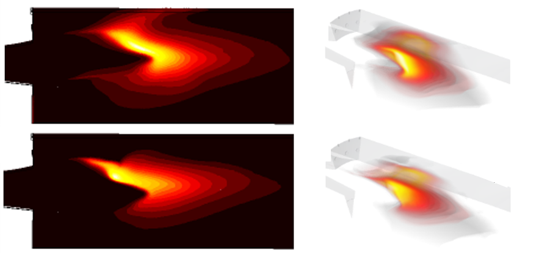
CFD results of 2nd stage reheat flame

Combustor prototype design and testing

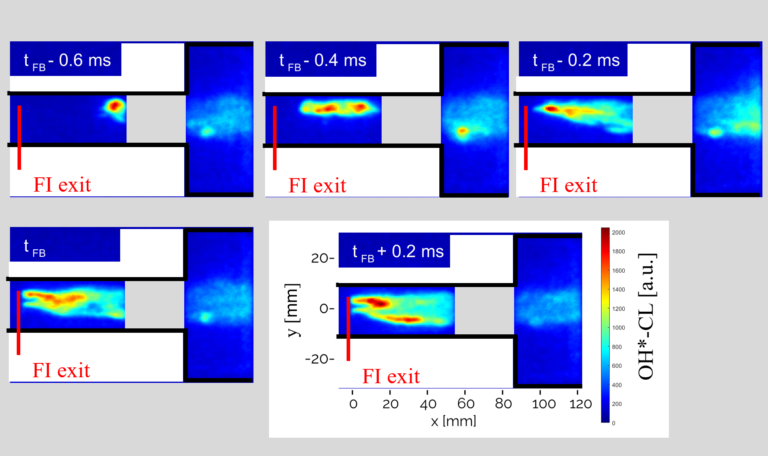
  • Scaled, optically accessible high‑pressure tests have characterized hydrogen auto‑ignition flame behavior, providing essential data for validating simulations and supporting combustor design optimization. 
  • H₂‑optimized combustor prototypes have been designed with improved injection and mixing features to support higher firing temperatures and extended flexibility. Advanced instrumentation enabled full characterization of the new designs.
  • Full‑scale high‑pressure testing has demonstrated stable combustor operation with natural gas, hydrogen, and all intermediate blends, reaching the project target technology readiness level (TRL6).
High-speed imaging sequence (OH*-CL, line-of-sight) of 2nd stage reheat flame

Excellence in innovation & Impact

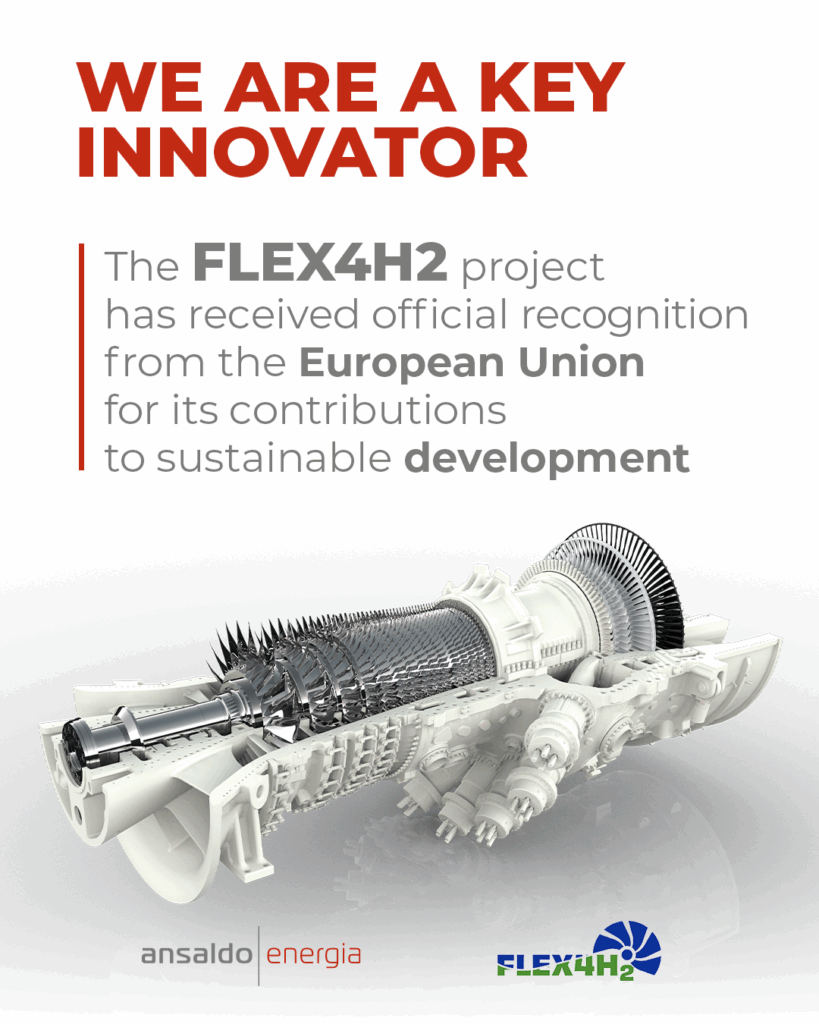
Key Innovator – FLEX4H2 was officially endorsed by the EU’s innovation Radar for its innovations under the sustainable development goal “Affordable and Clean Energy”. Click here for more information.

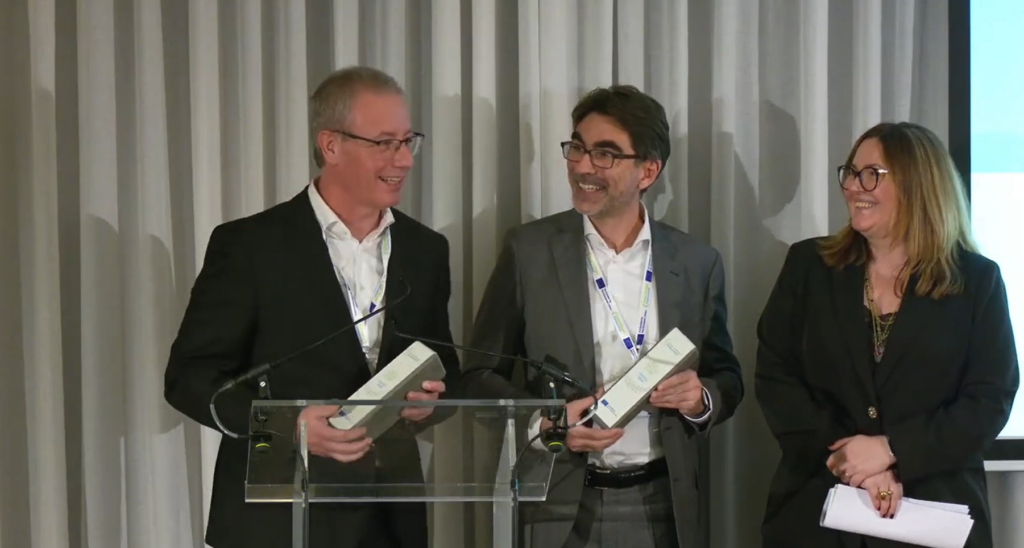
Clean Hydrogen Partnership 2025 Awards – nominated in two categories (Best Success Story & Best Innovation), we were awarded the former, together with our sister project HELIOS. Find here more details.

Clean Hydrogen Partnership Co-funded by the European Union Project co-funded by Swiss Confederation
This project is supported by the Clean Hydrogen Partnership and its members Hydrogen Europe and Hydrogen Europe Research (GA 101101427), and the Swiss Federal Department of Economic Affairs, Education and Research, State Secretariat for Education, Research and Innovation (SERI)
Views and opinions expressed are however those of the author(s) only and do not necessarily reflect those of the European Union, Clean Hydrogen Joint Undertaking, or Swiss State Secretariat for Education, Research and Innovation (SERI). Neither the European Union nor any other granting authority can be held responsible for them.